Immune health tracking and literacy app
The Problem
Immune health is a critical yet largely invisible aspect of everyday wellbeing. While people increasingly use apps and wearables to track steps, sleep, and heart rate, immune health remains difficult to understand, monitor, and act upon. Interviews revealed that most participants valued immunity but lacked clear knowledge of what “good immune health” looked like, often relying on vague advice, intuition, or fragmented online information. Existing health apps either ignored immunity altogether or presented complex biometrics without sufficient explanation, context, or guidance. This created a gap between data availability and meaningful understanding, leaving users unable to translate health information into preventative action. In a post COVID context, this lack of immune literacy and accessible tracking posed both personal and systemic challenges, particularly for individuals managing fatigue, stress, or recurring illness.
My Role
Design Process
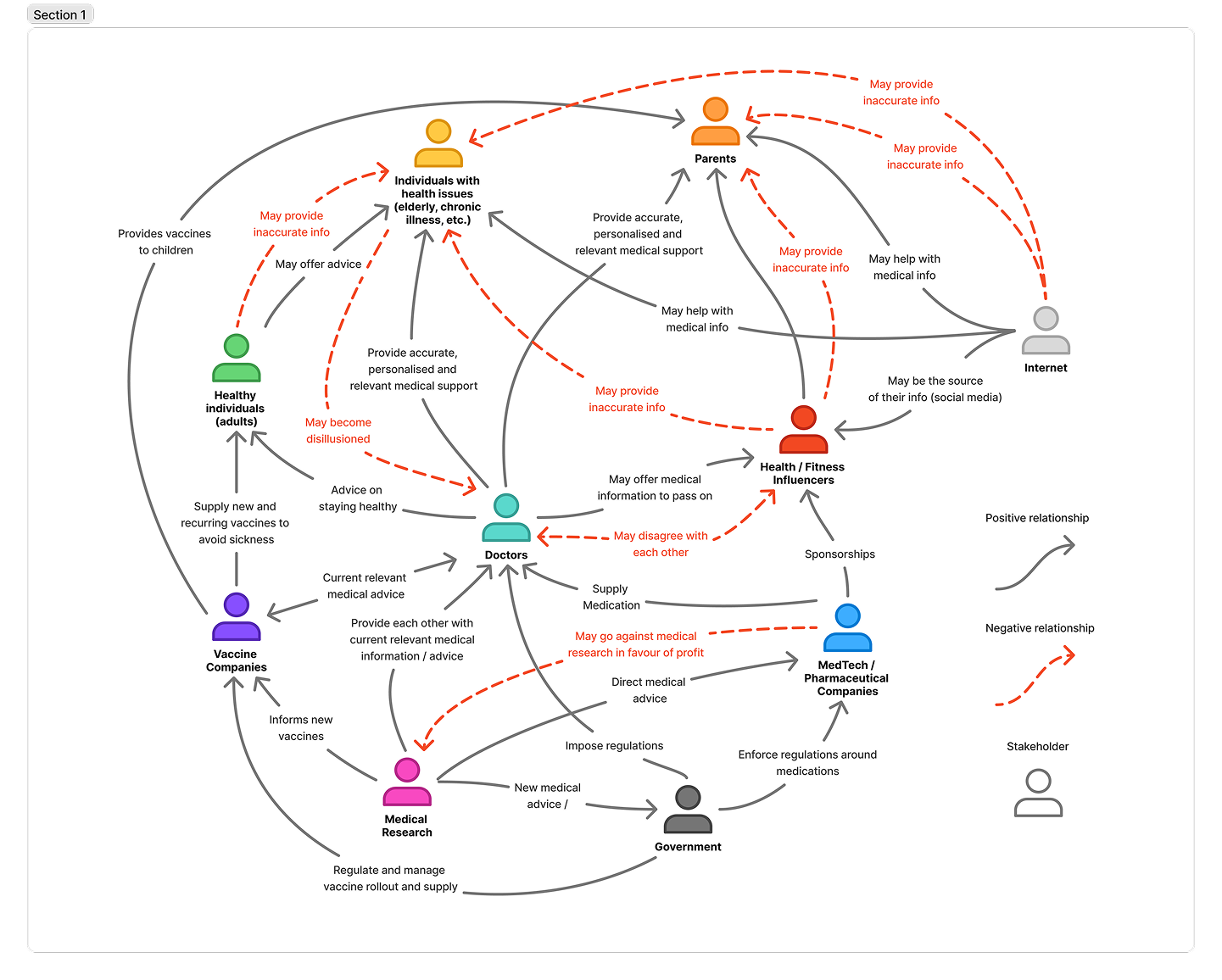
We began by framing immune health as a complex, networked problem domain involving individuals, health professionals, wearables, institutions, and misinformation sources. A rich picture was developed to visualise these relationships, highlighting fragmented data flows, trust gaps, and the emotional burden placed on users navigating health information. Primary research included interviews with healthy individuals, immunocompromised participants, and healthcare practitioners. These revealed consistent themes: users preferred holistic views of health, struggled with medical jargon, and wanted guidance that felt achievable within daily routines. Importantly, participants expressed frustration with apps that surfaced metrics without explaining why they mattered or how to improve them.
The Solution
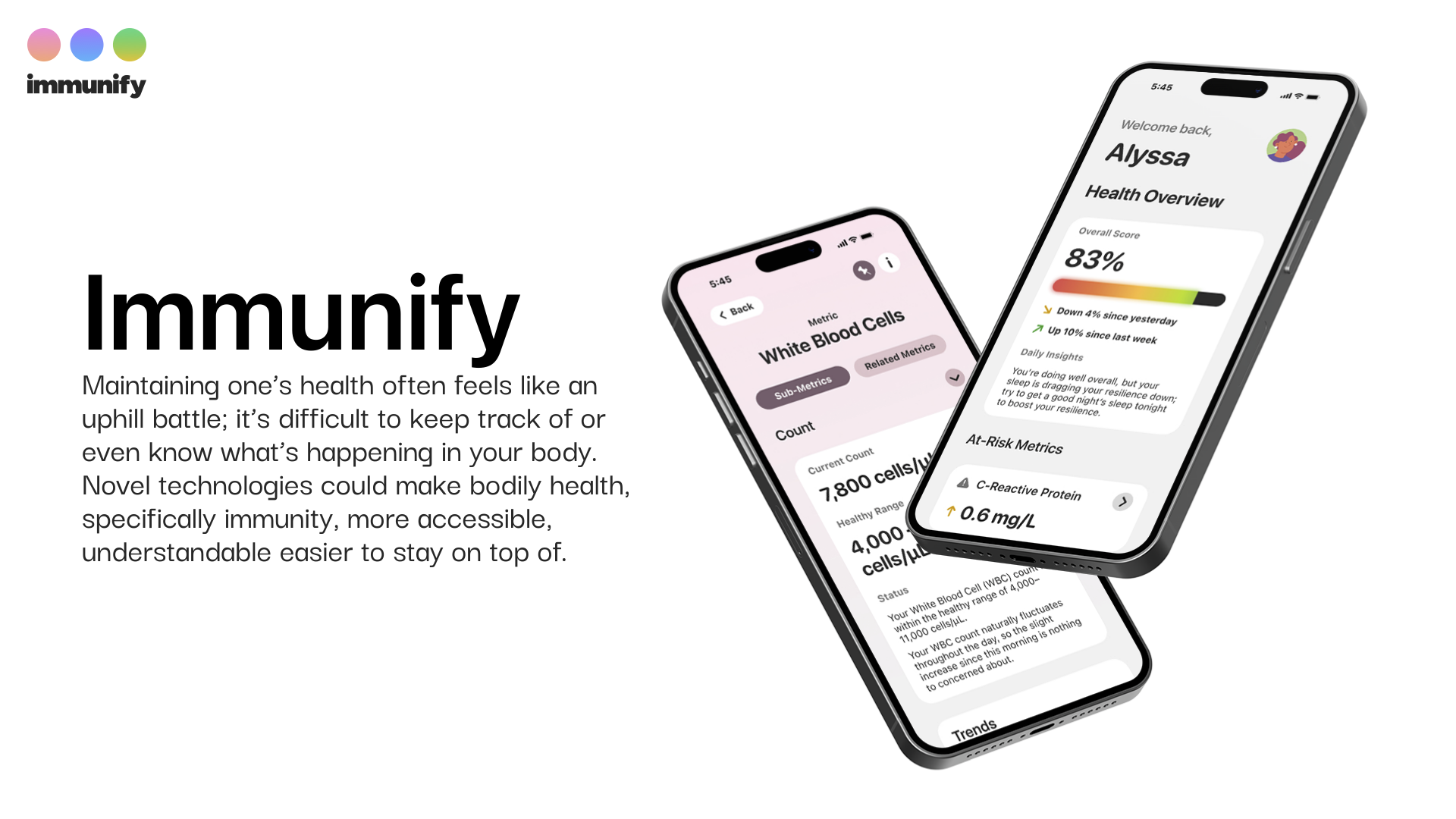
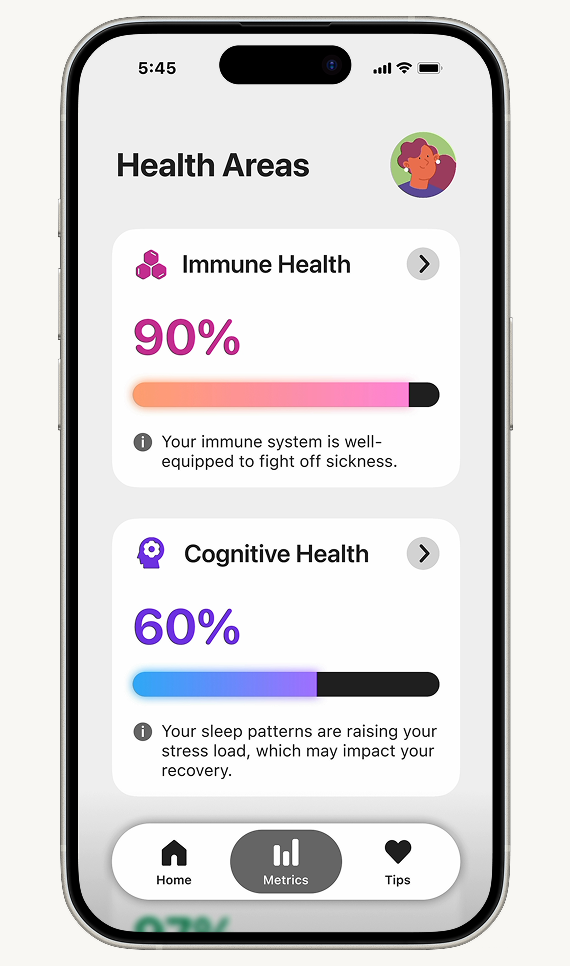
Immunify is a mobile app that reframes immune health tracking as a learning and prevention experience rather than a diagnostic tool. It aggregates immune related indicators, lifestyle factors, and wearable data into a single, intuitive dashboard. Complex metrics are translated into clear visual states using colour and simple language, allowing users to quickly understand their immune readiness at a glance. The core value lies in actionable guidance: Immunify provides concise, evidence based tips tailored to each metric, helping users understand what they can realistically do to support their immune health. By embedding education within everyday interactions, the app builds immune literacy while remaining approachable, supportive, and non clinical.
Further examples here

