Use for free
GARDEN
Interactive art project made with Touchdesigner, Blender, Rasberry Pi, 3D printing, and motion sensors

Interactive Art Installation
Challenge

The Task

Garden was conceived in response to a central challenge: how might we design an interactive experience that meaningfully explores the blurred boundaries between humanity, nature, and technology without reducing these relationships to simple binaries. In a world increasingly mediated by technology, we wanted to move beyond passive observation and instead confront audiences with a choice that mirrored contemporary tensions around agency, temptation, and consequence. The challenge lay in translating an abstract philosophical concept into an embodied, intuitive interaction that could evoke unease, reflection, and self awareness through participation rather than explanation.

My Role

My primary responsibility on the project was designing and implementing the interactive system in TouchDesigner. I built the real time logic that connected physical input from the apple to the visual environment using CHOP networks to ingest and process motion data from the MPU6050 via Serial nodes. I filtered and normalised sensor values to reduce noise, then mapped these channels to parameters across TOPs and SOPs, driving particle systems, glitch effects, and procedural transformations in real time. I structured the TouchDesigner network to support clear state changes, controlling transitions between surveillance, distortion, and environmental collapse. Through iterative calibration of thresholds, feedback loops, and timing, I ensured the interaction remained responsive, legible, and conceptually intentional. I worked closely with the team to align these technical systems with the project’s narrative, translating symbolic ideas into explicit interaction rules embedded within the TouchDesigner system.
Process

Design Process

Our design process began with conceptual exploration and research into myth, symbolism, and contemporary human technology relationships. Using the Garden of Eden as a narrative framework, we mapped themes of temptation, agency, and judgment to potential interactive moments. Early sketches and storyboards helped us define the role of the apple as a tangible interface and focal point of user choice. From a UX perspective, we paid close attention to how much guidance to give users, intentionally designing ambiguity into the interaction to encourage curiosity and tension.

We then moved into iterative prototyping, combining digital and physical experimentation. Low fidelity tests explored how users approached the apple, how quickly they understood its significance, and how movement might feel as an input mechanism. In parallel, we developed the visual system in Blender, After Effects, and TouchDesigner, gradually layering in glitches, ASCII visuals, and environmental reactions. Continuous testing allowed us to tune thresholds for motion sensitivity, pacing of visual decay, and the balance between responsiveness and overwhelm, ensuring the experience remained legible while emotionally impactful.
Results

The Final Product

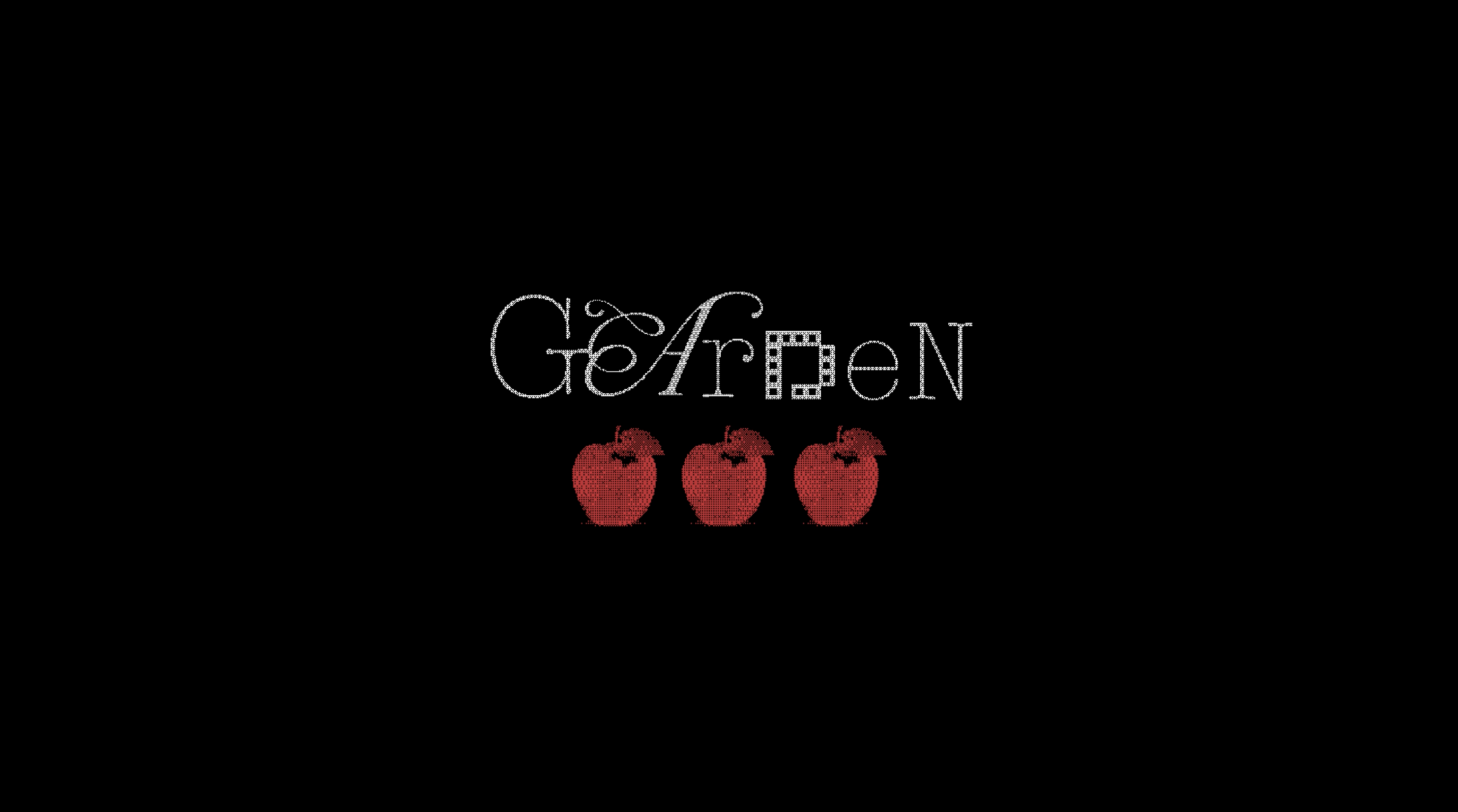
The final outcome is an immersive, active interactive installation where users reveal the “truth” of the modern world through physical engagement. By picking up and moving the apple, participants directly influence the digital forest environment in real time. Incorrect choices trigger a feeling of being watched, while the correct interaction causes the forest to glitch and ultimately dissolve into darkness. The integration of a motion sensor embedded within a 3D printed apple creates a seamless link between physical action and digital consequence, reinforcing the project’s central theme of co creation between human, natural, and technological systems.

Garden challenged me to think beyond traditional screen based UX and consider how interaction design operates in space, narrative, and embodiment. Designing for ambiguity and discomfort pushed me to trust the user’s interpretive capacity rather than over explain intent. The project strengthened my skills in translating conceptual frameworks into tangible interactions and collaborating across disciplines such as physical computing and generative visuals.

For more details regarding this project such as figma files etc. please contact me at miaicasey1971@gmail.com